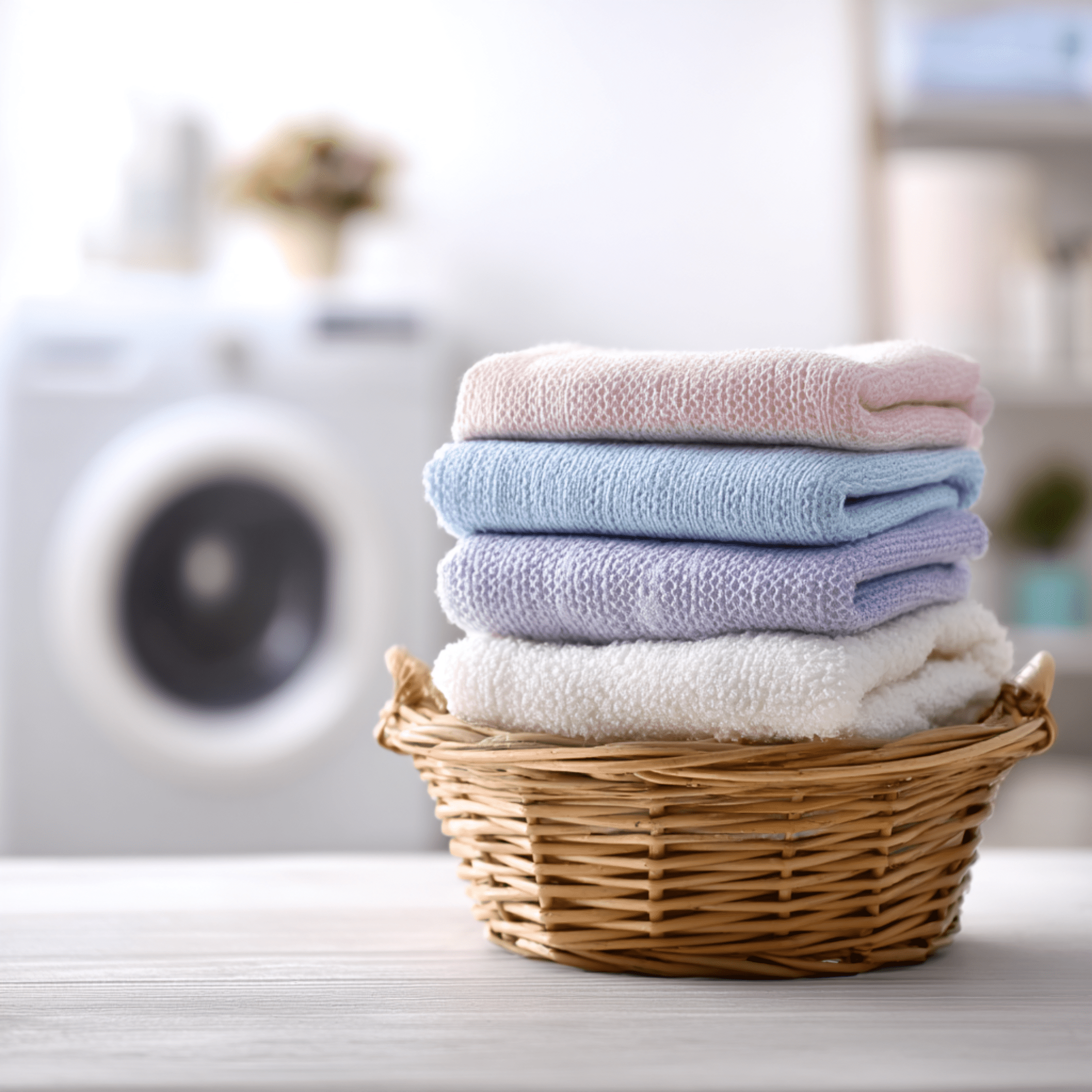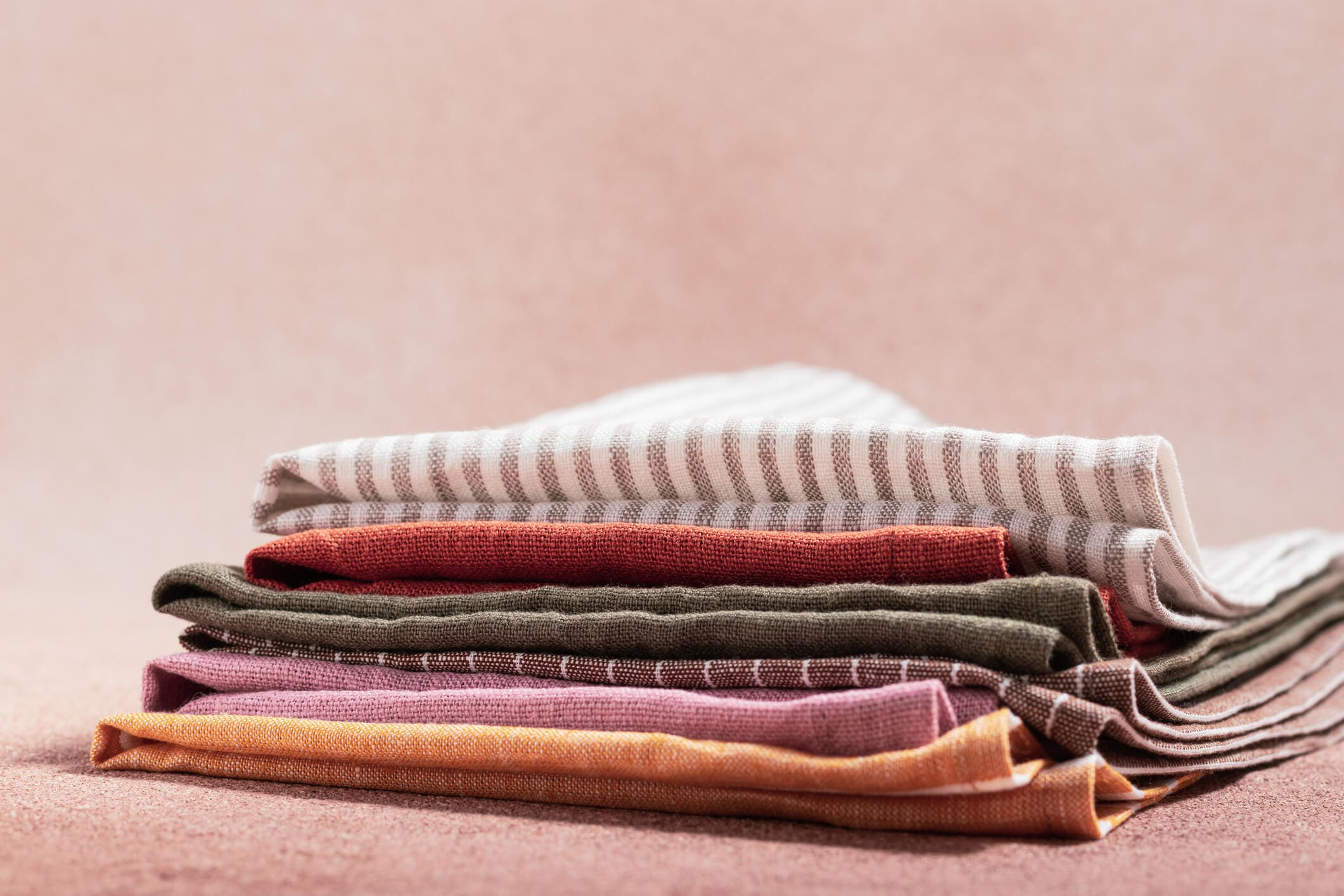
Grease doesn't stay where it lands. Every time the stove runs, some of it goes airborne and settles onto whatever soft surface happens to be nearby – curtains, cushions, oven mitts, table pads – and it stays there, oxidizing quietly for months. A regular wash barely touches it, which is exactly why a spotless kitchen can still smell like it's been cooking something for days.
This is the actual mechanism behind that smell, and the eight fabric items you'll want to check before Thanksgiving guests arrive.
Cooking releases airborne grease that settles on every soft surface in the room, not just the stove. Over time, that film oxidizes, turning sticky, then stiff, then faintly yellow, and trapping into it whatever was cooked. Regular detergent lifts surface dirt, but it can't break down grease that's already worked into the fibers. That's why a kitchen can smell like last night's dinner even right after you wipe every counter. The smell isn't in the air. It's in the textiles.
Not sure which of your fabrics need attention? Run this check on anything that's been in the room a while:
[ 1 of 8 ]
They hang closer to the stove than almost anything in the room, and most households never take them down. Watch for yellowing along the bottom hem, stiffer fabric, and a faint smell when you touch them. Skip the home wash if yours are lined. The face fabric and lining shrink at different rates when wet, leaving panels that no longer hang straight.
A lightweight, unlined cotton or linen panel can sometimes handle a gentle home wash if it's only lightly soiled. Lined and interlined panels can't be treated the same way. Professional cleaning treats each layer correctly, keeps the drape intact, and avoids the puckering or shrinkage a home machine can cause.
[ 2 of 8 ]
These are the most-used, least-cleaned items in any kitchen, and they're often the first thing a guest sees sitting on your counter. Grease saturates the batting inside rather than sitting on the surface, which is why mitts can feel heavy and still smell faintly even after a wash. There's a safety angle here too: oil-saturated batting loses some of its heat resistance over time.
If a mitt or pot holder has gone stiff, developed dark patches, or feels thin in spots, cleaning won't restore its heat protection. That combination is a sign it's done its job, and it's time for a new one, not another wash.
[ 3 of 8 ]
These have been sat on for years and spilled on more times than anyone's counted, yet they're rarely removed because the covers don't look like they come off. Most actually have a zipper hidden along the back seam. Foam inserts hold odor on their own, separate from the cover, which is why washing just the cover often doesn't fix the smell. Your guests will be sitting on these for the length of the meal.
Flip over the cushion and run a hand along the back seam, closest to where it ties to the chair. Most zippers sit flush with the fabric and are easy to miss at a glance. Check the care tag before removing anything, since foam inserts and covers often need different handling.
[ 4 of 8 ]
This is the layer nobody thinks about, because it lives under the tablecloth and stays out of sight all year. Spills soak through the cloth into the pad underneath, and that moisture stays there while the pad spends eleven months folded in a closet, developing a smell of its own. A musty pad will scent the tablecloth laid over it, so it's worth checking now rather than discovering it the morning of.
Pull out the table pad now and unfold it fully in a well-lit room. Check for a musty smell, any stiff or discolored patches, and whether or not it still lies flat. Finding a problem two weeks out gives you time to fix it. Finding it while setting the table doesn't.
[ 5 of 8 ]
This is different from the loose cushions above. Fixed upholstery can't go into a machine at all. It absorbs airborne grease the same way as everything else in the kitchen, plus years of direct contact soil at the seat and back where people actually sit. This is also the item with the longest lead time on this list, which is why it needs to be handled first.
Upholstery cleaning involves drying time loose fabric items don't need, and appointment availability tightens fast as Thanksgiving gets closer. Booking this the same week you notice it needs cleaning usually means it's not ready in time. Booking it two weeks out usually means it is.
[ 6 of 8 ]
These have usually been folded in storage since last Thanksgiving, which means they carry both last year's leftover residue and a set of fold creases from the closet. Quilted and textured placemats are worse than flat ones, since crumbs and oil work into the stitching where a wipe-down never reaches. A runner that looked clean going into storage can come out with faint brown marks that weren't visible a year ago.
Once these items are clean this year, store them flat or loosely rolled rather than tightly folded, and keep them in a breathable bag away from the kitchen itself. Grease particles travel farther than most people expect, and a linen closet next to the kitchen isn't as separate as it feels.
[ 7 of 8 ]
This is the one item the host will actually be photographed wearing. Oil builds up in the chest and lap panels over repeated use, and because it's oil rather than a single stain, repeated home washing tends to dull the fabric without fully lifting out the grease. It's worth checking now rather than discovering the state of it while tying it on for the meal.
A lightweight cotton apron behaves differently than a heavier canvas apron. Canvas holds more oil deeper in the weave and takes longer to fully clean, while linen can lose its shape if it's washed too aggressively at home. Knowing which fabric you're working with helps set the right expectation for how much cleaning it actually needs.
[ 8 of 8 ]
This is the most obvious item on the list, which is why it comes last, but it has the highest turnover of anything you'll use on the day itself. The real issue isn't cleanliness so much as quantity: a Thanksgiving kitchen goes through far more towels than a normal day.
If a towel still smells faintly after washing even though it looks clean, that's the same trapped-odor issue covered above, not a sign you did the wash wrong.
Plan on one clean towel for every two to three guests, plus a few extra set aside strictly for handling raw food. Most hosts underestimate this and end up reaching for the same damp towel through the whole afternoon. A stack of eight to ten ready to go solves it.
This holiday hosting checklist works backwards from Thanksgiving Day, tackling these in order of turnaround time, longest first:
Taking down curtains the Tuesday before Thanksgiving and not getting them back in time is a worse outcome than leaving them up dirty for one more meal. Bare windows are more noticeable to guests than curtains that could have used a wash. Start with the items on the longest timeline, and everything else has room to fit around it.
Every fabric on this list holds the same kind of stubborn, oxidized grease a home wash was never built to break down. That's exactly the gap our dry cleaning service was designed to close.
At Blue Ribbon Cleaners, we use advanced Sensene cleaning to lift oil and grease out of fabric without stripping color, softness, or shape, so your curtains, cushions, and table linens come back looking and smelling like new. It's the same careful process on every piece we take in, every time.
Don't wait until the week of Thanksgiving to take your kitchen fabrics to the cleaner. Feel free to bring them in right now or schedule a FREE Pickup and Delivery Service online, and we'll handle it from here.
Address:
Phone: +1 330 632 1873